Six brands, one website
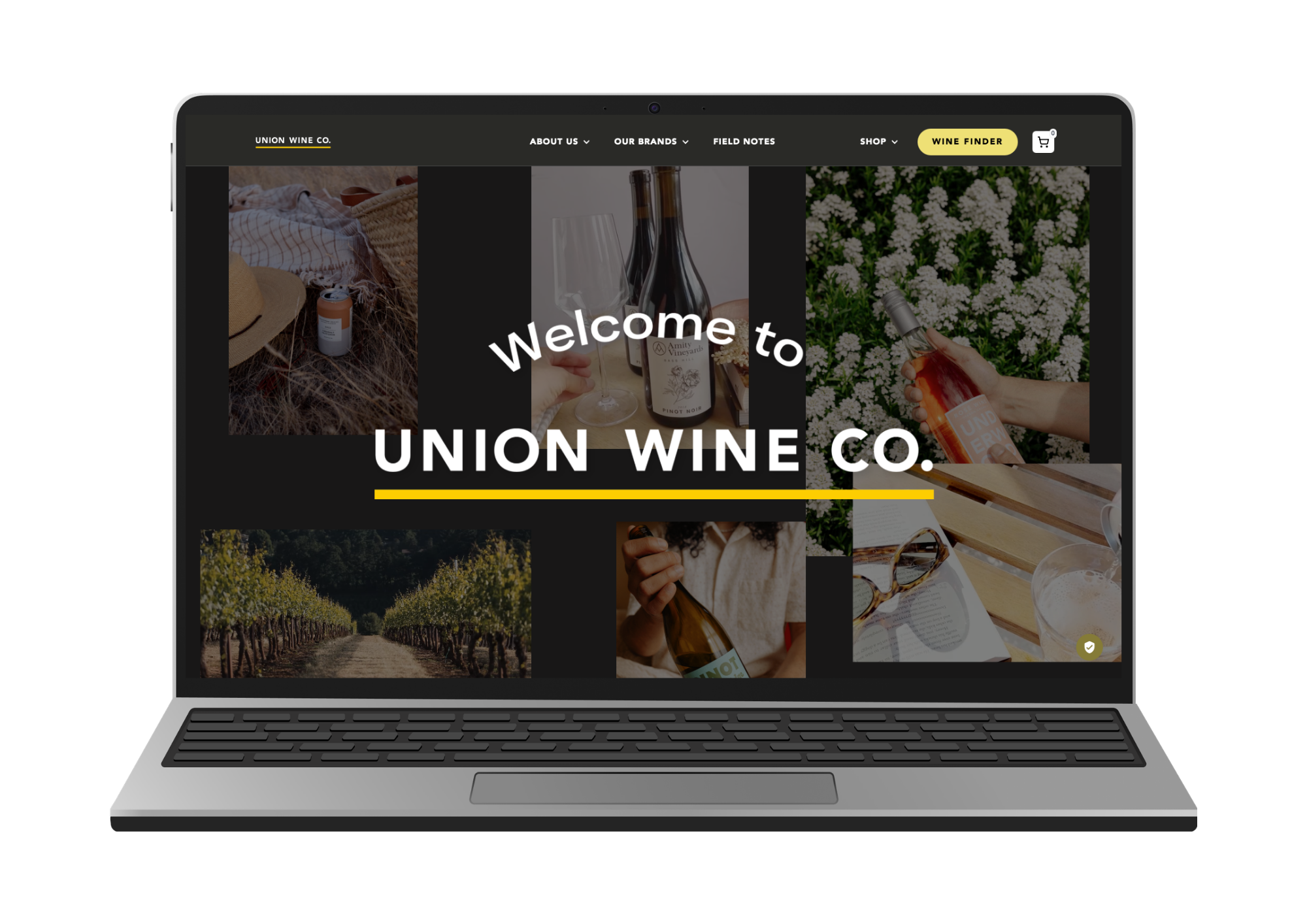
Six brands were spread across four websites, one of them more than ten years old. I brought them home to one.
At a glance
Role: Associate Marketing Manager, Union Wine Co., Project lead, from platform research to launch, and site owner since launch
Team: Me, our owner as final sign-off, and Story Manufacturing
Scope: 6 brands, 4 websites → 1
Platform: WordPress and 3 Shopify stores → Webflow, connected to Shopify
Timeline: About 6 months, launched June 2026
The problem
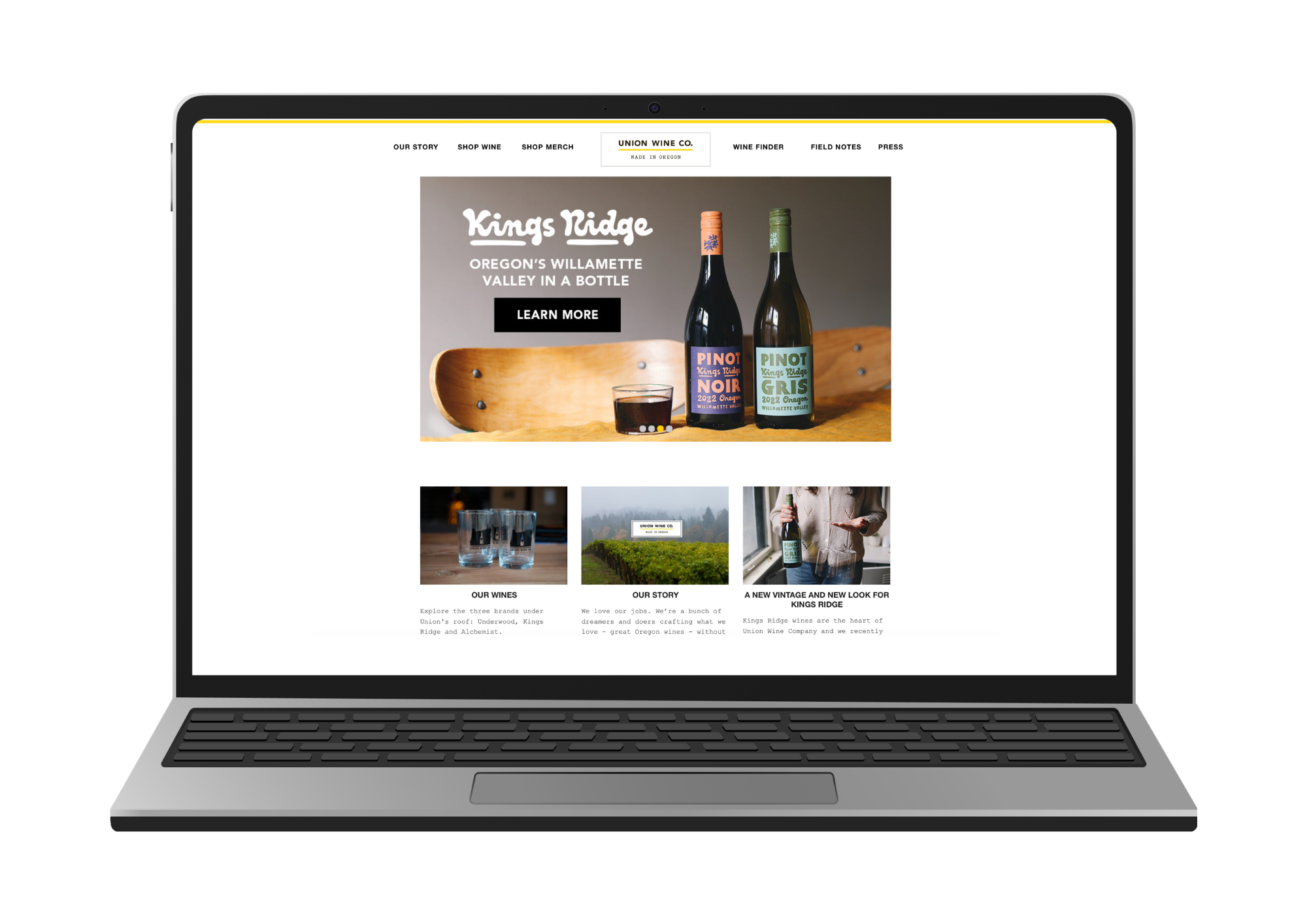
We're a house of six brands, but online we looked like four unrelated companies. Three brands had their own Shopify stores, which I'd built, and the other three shared a WordPress site more than ten years old, with its shop on a separate URL, so buying felt like leaving for another store. You couldn't shop across brands in one cart, our company and vineyards barely showed up anywhere, and the old backend needed constant maintenance, security fixes and app updates.
The website was also the start of a bigger project. Union Wine Co. started with three brands and has grown to six, and we needed to show up online as one house of brands.
How it ran
A small team and a small budget. I ran the project day to day and worked directly with our owner, bringing him the big calls (platform, partner, structure, naming) with a recommendation for each. Keeping the circle that small is a big part of how we launched in about six months.
The strategy, in three calls
One house, not six storefronts. Shoppers and retailers already buy across our brands, so the site should too: one cart, one shop, each brand still with its own space. That meant one place to send traffic and one Shopify backend for our team to manage.
Tell the story behind the brands. Our vineyards and the company were our most credible asset and appeared nowhere online. Giving them a home makes every brand more believable.
Build it to be run in house. Webflow meant a small team could keep the site current without a developer for every change, which is exactly how it runs today.
What I did
Platform and partner. I researched which platform could carry six brands and still sell well, chose Webflow for the brand experience with Shopify handling the shop and checkout, and worked out how the two would connect. I also vetted agencies and freelancers and chose Story Manufacturing, a past partner, to build it, within a budget that ruled out a full agency rebuild.
Architecture. Working with our design partner, I shaped the structure: one umbrella site, a dedicated space for each brand, and every product in a single shop. I also made the case for what we'd never shown online before, the story of the company and our vineyards.
Story, copy and naming. I led the rewrite of our brand stories and wrote or updated copy across the site, so six brands sound distinct but clearly belong together. I also worked with our owner on renaming our vineyards, so they could be presented as one family for the first time.
Photography. I curated the imagery for every brand and the vineyard pages, and shot some of it myself.
Hands in the build. I didn't just manage the partner. I worked in Webflow myself, uploading products, pages and images and making changes through launch.
After launch
The site runs in house now, and I run it. That was the point of the platform choice. A new product goes in once instead of on up to four sites, and I make page and content changes. I add new products as they launch and publish new content when we need it.
I'm building it to be found in search and in AI answers. Consolidating four sites into one domain puts all our authority in one place, and I made SEO updates: meta titles and descriptions, redirects from the old sites, new landing pages. For answer engines like ChatGPT, Perplexity and Google's AI Overviews, I built a large FAQ section that answers the questions people actually ask about our wines, brands and vineyards. I also made sure the site is readable to AI crawlers: the age gate is a pop-up that doesn't hide the page from them, product names and descriptions sit in the page itself rather than loading in afterward, and every product page carries the facts answer engines quote, like varietal, AVA, ABV, tasting notes and pairings. A store locator answers the most common question of all: where can I buy it?